How Washington Can Credibly Counter China in the Pacific
The United States must develop a comprehensive, consistent, and fully resourced strategy for the Pacific region to effectively counter China's influence, strengthen alliance networks, and maintain long-term regional stability.

The United States faces a defining strategic challenge in the Indo-Pacific: how to maintain a credible deterrent posture against China while avoiding unnecessary escalation that could trigger conflict. The current U.S. approach, while rhetorically firm, lacks the coherence, resource alignment, and long-term planning needed for sustained regional stability. As China continues to expand its military capabilities, economic influence, and diplomatic reach across the Pacific, Washington must move beyond ad hoc responses and develop a comprehensive grand strategy.
Charles Edel and Kathryn Paik of the Center for Strategic and International Studies (CSIS) argue that the cornerstone of any effective U.S. strategy must be the strengthening and deepening of regional alliances. The U.S. treaty alliance network — encompassing Japan, South Korea, Australia, the Philippines, and Thailand — remains America's greatest strategic asset in the region. However, these alliances have been underutilized, with Washington often treating them as bilateral arrangements rather than components of an integrated regional architecture. The authors propose transforming this network into a more cohesive, multilateral security framework capable of addressing shared challenges.
A second pillar of the proposed strategy involves economic statecraft that can compete with China's Belt and Road Initiative. The authors note that economic engagement is not merely a complement to security policy but a central instrument of influence. They recommend that the United States expand trade frameworks, increase development financing through mechanisms like the Development Finance Corporation, and work with allies to offer transparent, sustainable alternatives to Chinese infrastructure investment. The goal is not to exclude China from regional economic architecture but to ensure that alternatives exist for countries seeking to diversify their partnerships.
The third pillar addresses military posture and capability development. The report emphasizes that credibility derives not from the scale of American military presence but from the consistency and predictability of U.S. policy. Forward-deployed forces must be positioned to signal commitment without provoking unnecessary confrontation. This requires careful calibration: sufficient capability to deter aggression, combined with clear communication channels to prevent miscalculation. The authors recommend increased investment in distributed force posture, enhanced interoperability with allied forces, and expanded joint exercises that demonstrate collective resolve.
The report also addresses the domestic political dimension of Pacific strategy. U.S. policy toward the region has suffered from inconsistency across administrations, with each new president often reshaping priorities and reallocating resources. This unpredictability undermines confidence among allies and creates openings for Chinese diplomatic exploitation. The authors call for a bipartisan consensus on Pacific strategy, anchored in legislation that provides long-term funding commitments and strategic guidelines that transcend electoral cycles.
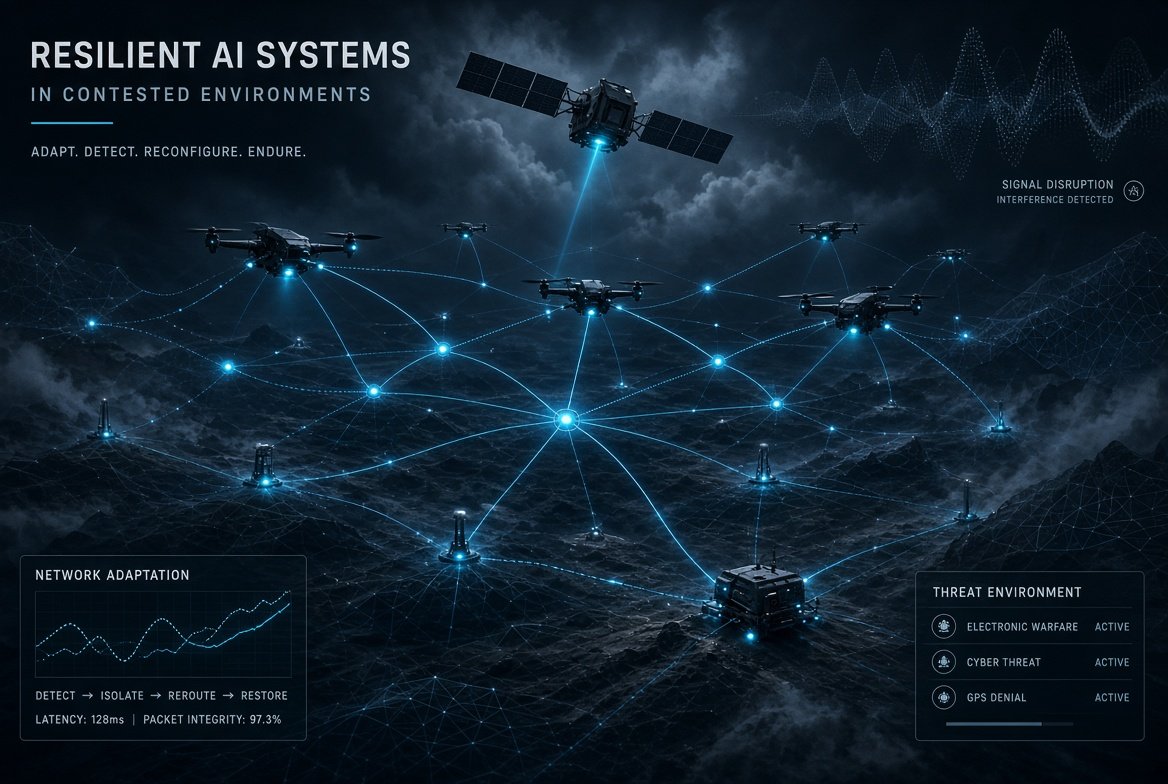
Finally, the analysis considers the role of emerging technologies in shaping the strategic balance. Artificial intelligence, quantum computing, hypersonic weapons, and space-based capabilities are transforming the nature of deterrence and conflict. The United States must lead in developing norms and frameworks for responsible use of these technologies while maintaining a technological edge over potential adversaries. This requires sustained investment in research and development, close coordination with the private sector, and international cooperation on technology governance.
The report concludes that credibility in the Pacific is not a function of military superiority alone but of strategic coherence, alliance strength, economic engagement, and domestic political resolve. Washington must demonstrate that it is a reliable, predictable partner capable of sustained commitment to regional stability. Only then can the United States effectively counter China's influence while preserving the rules-based order that has underpinned Pacific prosperity for decades.